
Interloper
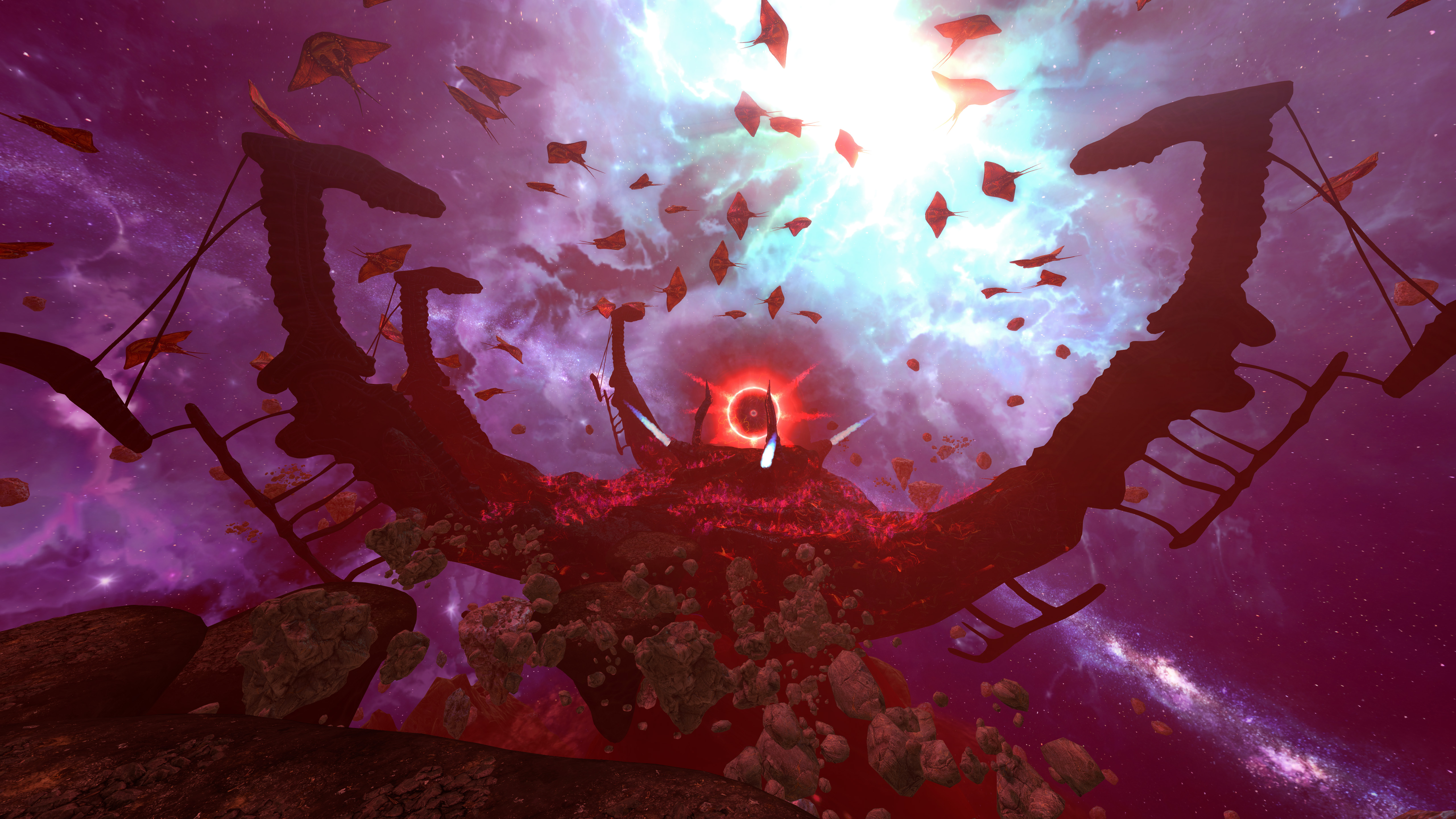
A gruelling push through the guts of the Tower factory at the end of Gordon Freeman's Xenian journey. Features large-scale combat encounters and interesting traversal and exploration through an alien industrial environment.
- Role: Chapter Lead
- Discipline: Singleplayer Level Design
- Engine: Source

I was the chapter lead for Interloper, which ended up receiving the most mixed reception of our Xen chapters, a fact that taught me a lot about myself as a designer.
I built the Garg Chase and Tower Waste Processing levels (four levels in total), as well as the chapter’s final Tower Portal set-piece. Across the rest of the chapter, I focused on maintaining a strong flow of puzzle and traversal ideas, while also layering and developing the “pacifist Vorts” mechanic, which I’m especially proud of.
From an artistic and narrative perspective, we wanted to convey the feeling of progressing deeper into a vast, living organism. The player is the titular “Interloper”: an invasive force rampaging through the factory, disrupting and destroying everything in their path.
Garg Chase
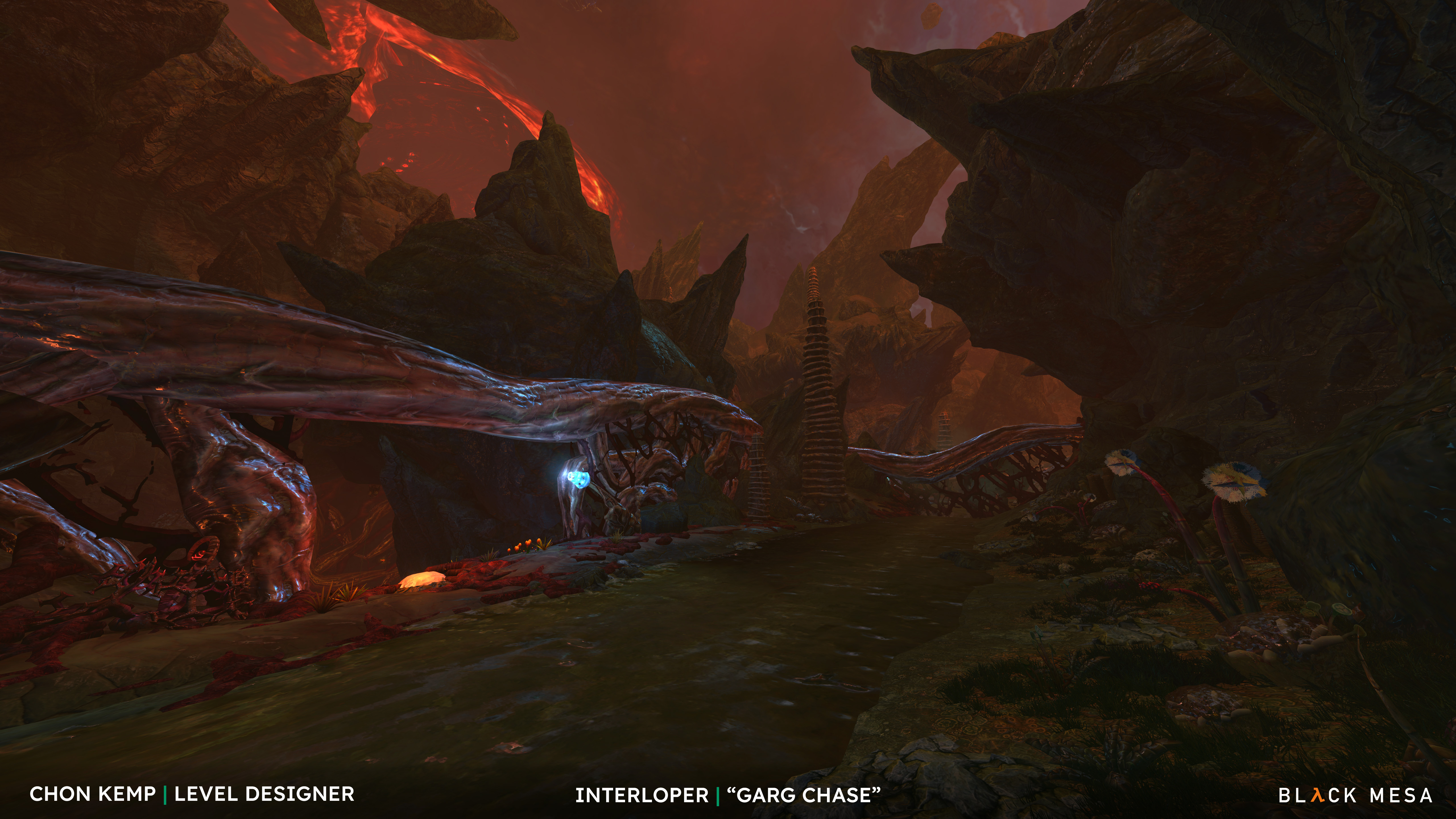
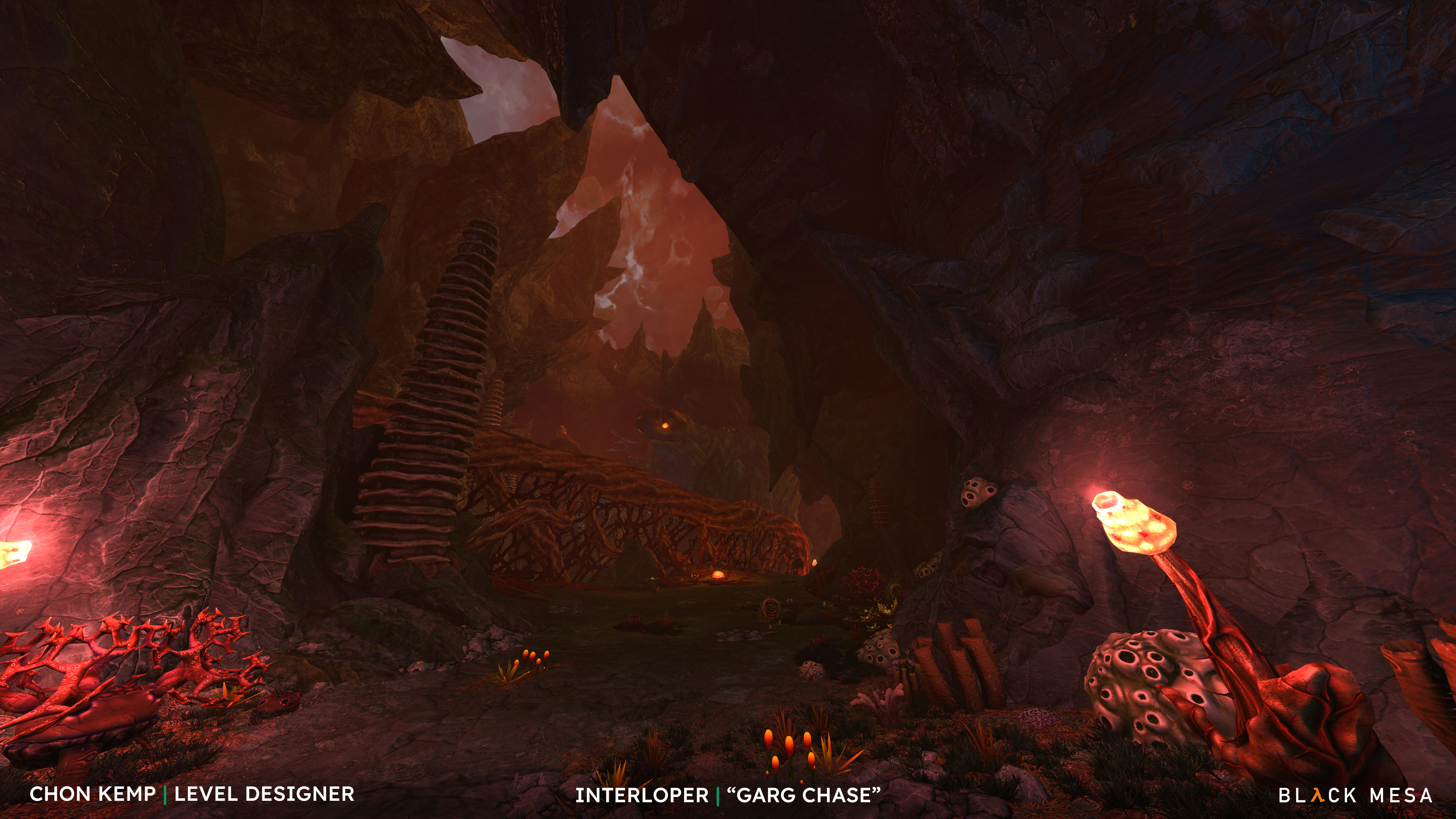
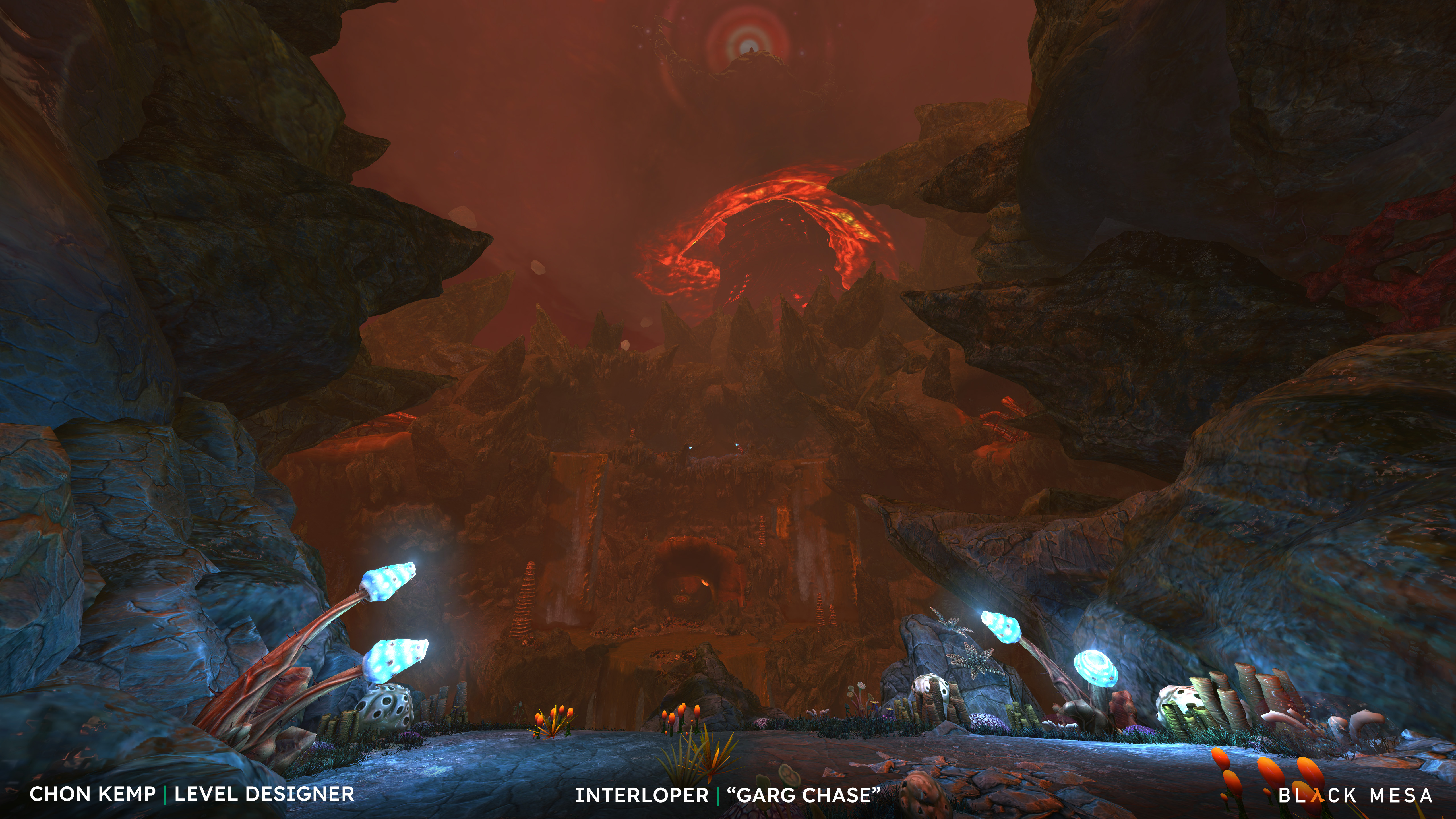
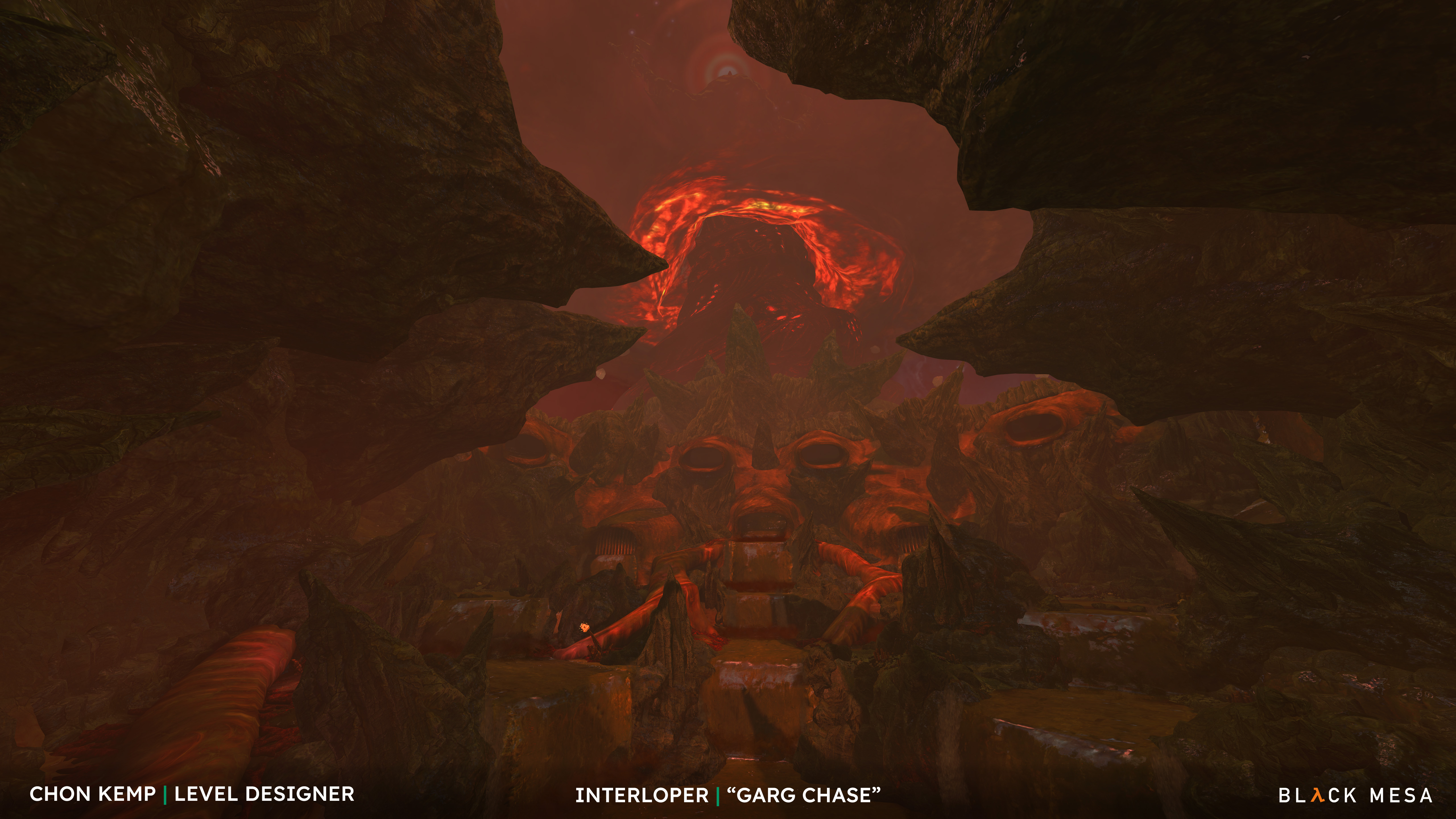
This level was a great opportunity to build on existing ideas and push them further. In Half-Life, the Gargantua is a powerful enemy that can’t be defeated through conventional means, usually requiring a puzzle or environmental solution to overcome. However, the original game’s chase encounters are fairly similar to one another.
For our version, we wanted to take this mechanic to a logical extreme. The idea was to overwhelm the player by introducing multiple Gargs in quick succession, making it feel like they’ve stumbled into a breeding ground or a lair.
I’m really happy with how this plays out, it feels almost absurd in the best way. Just as you think you’ve escaped, another Garg appears. Or two. Watching players scramble to escape threats from multiple directions is consistently chaotic and fun.
Waste Processing
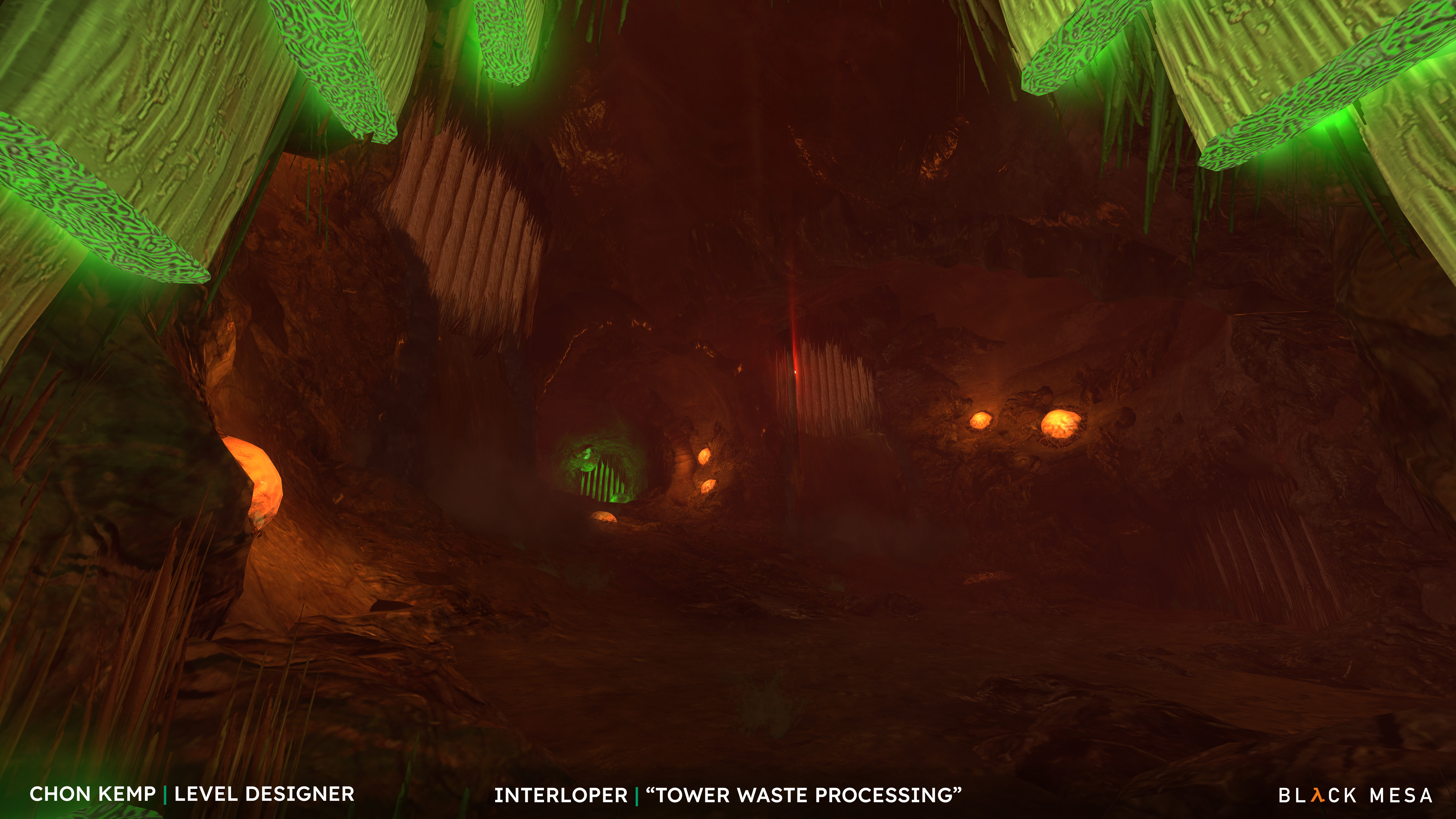
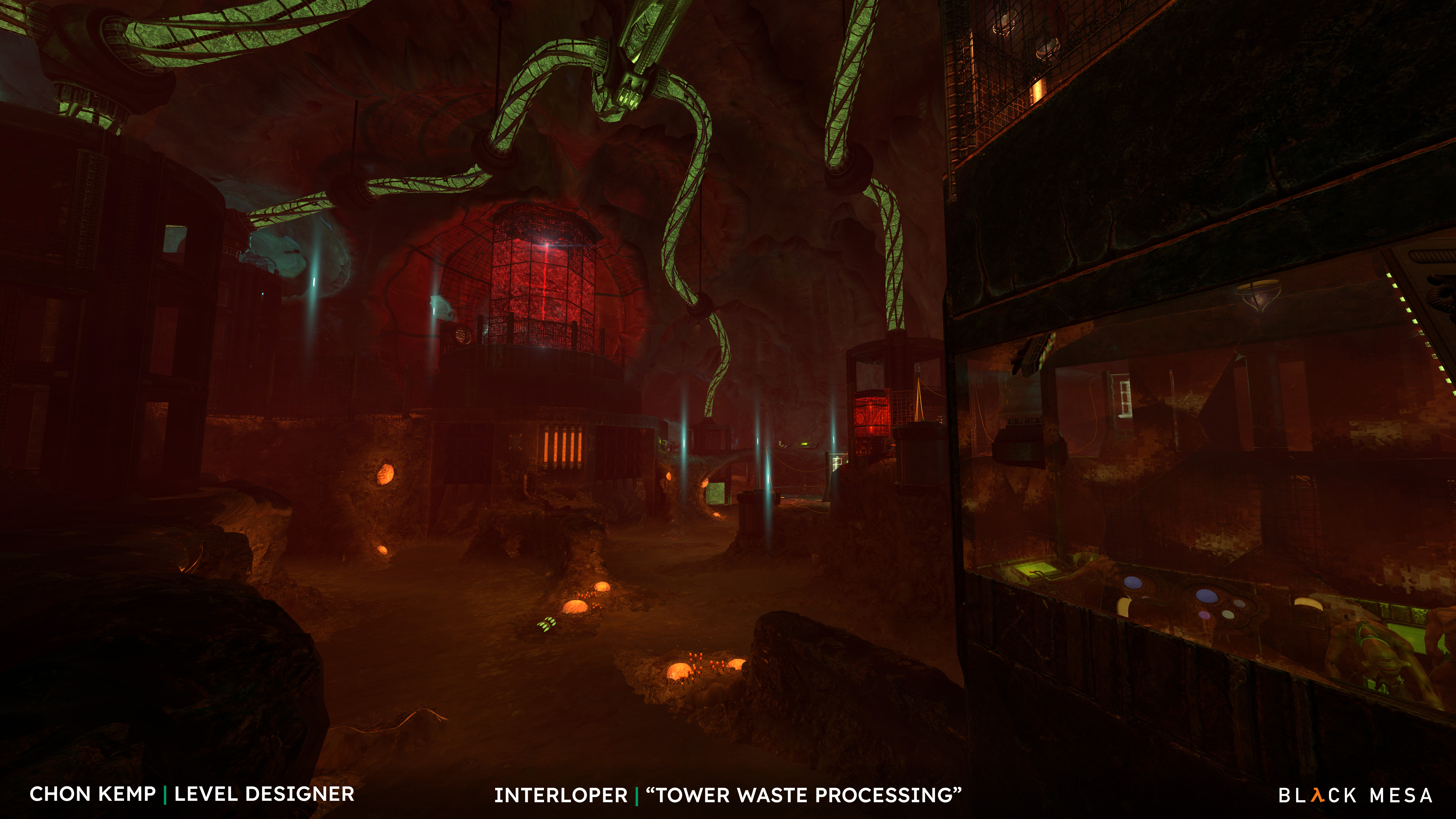
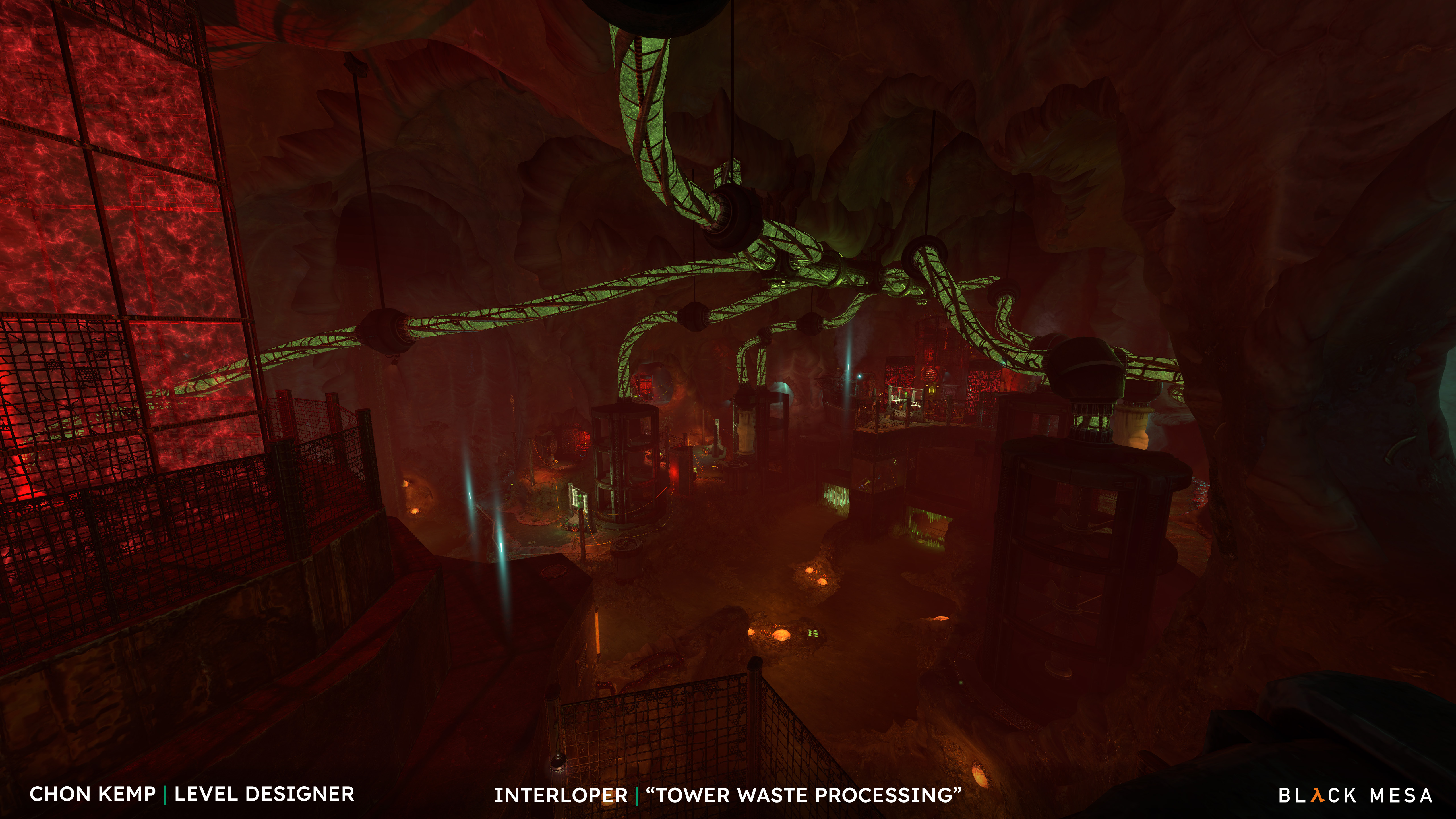
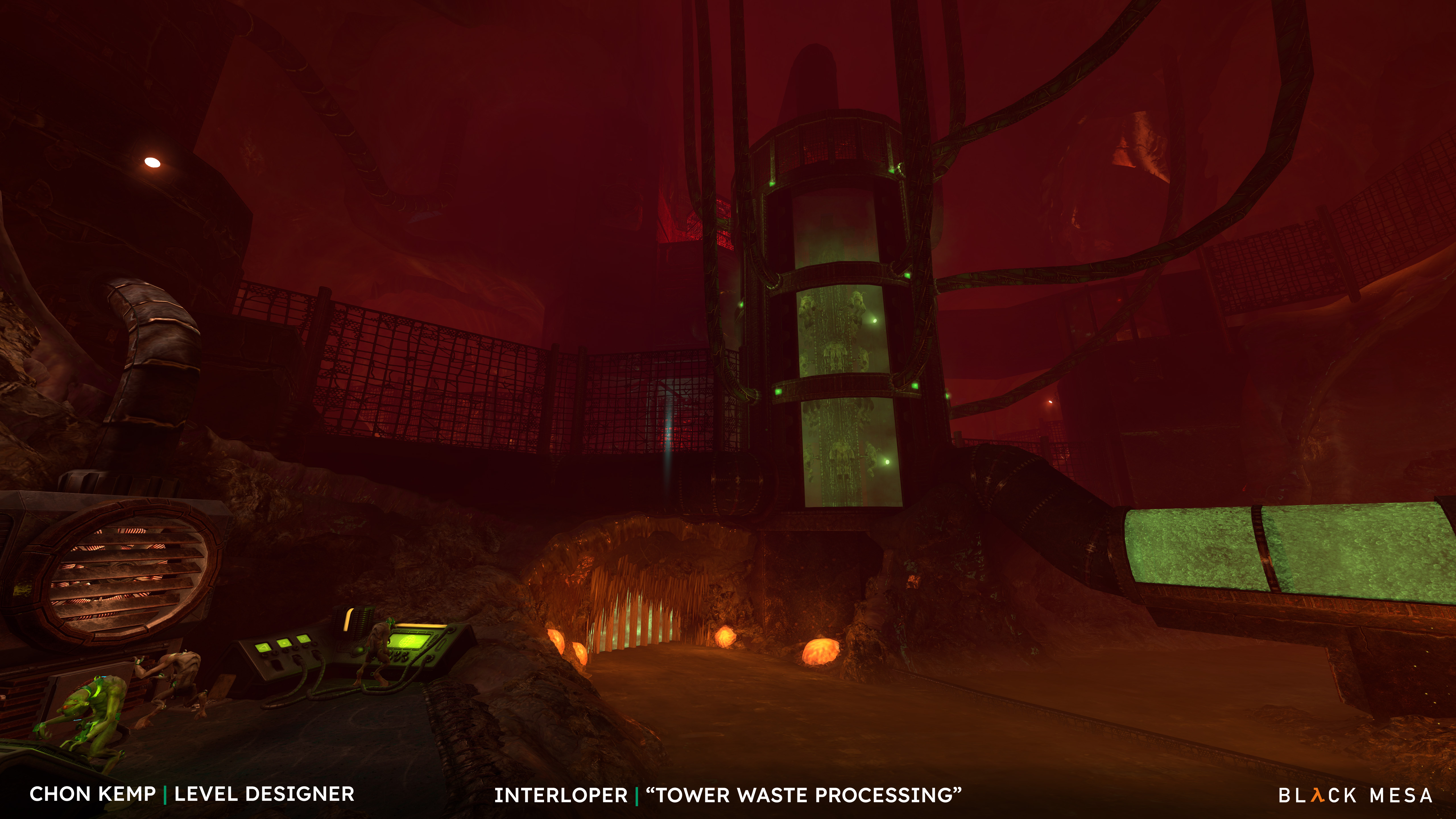
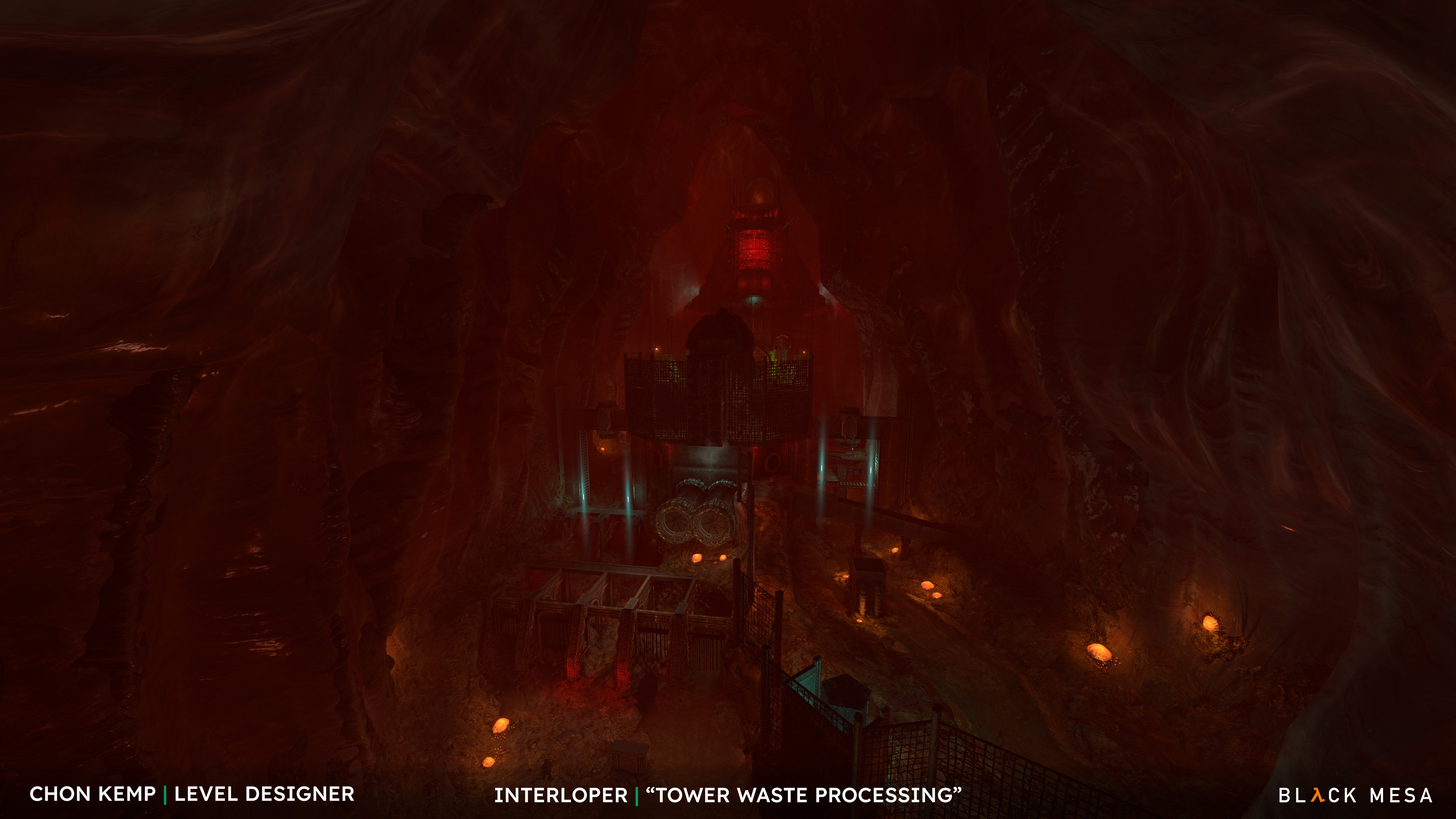
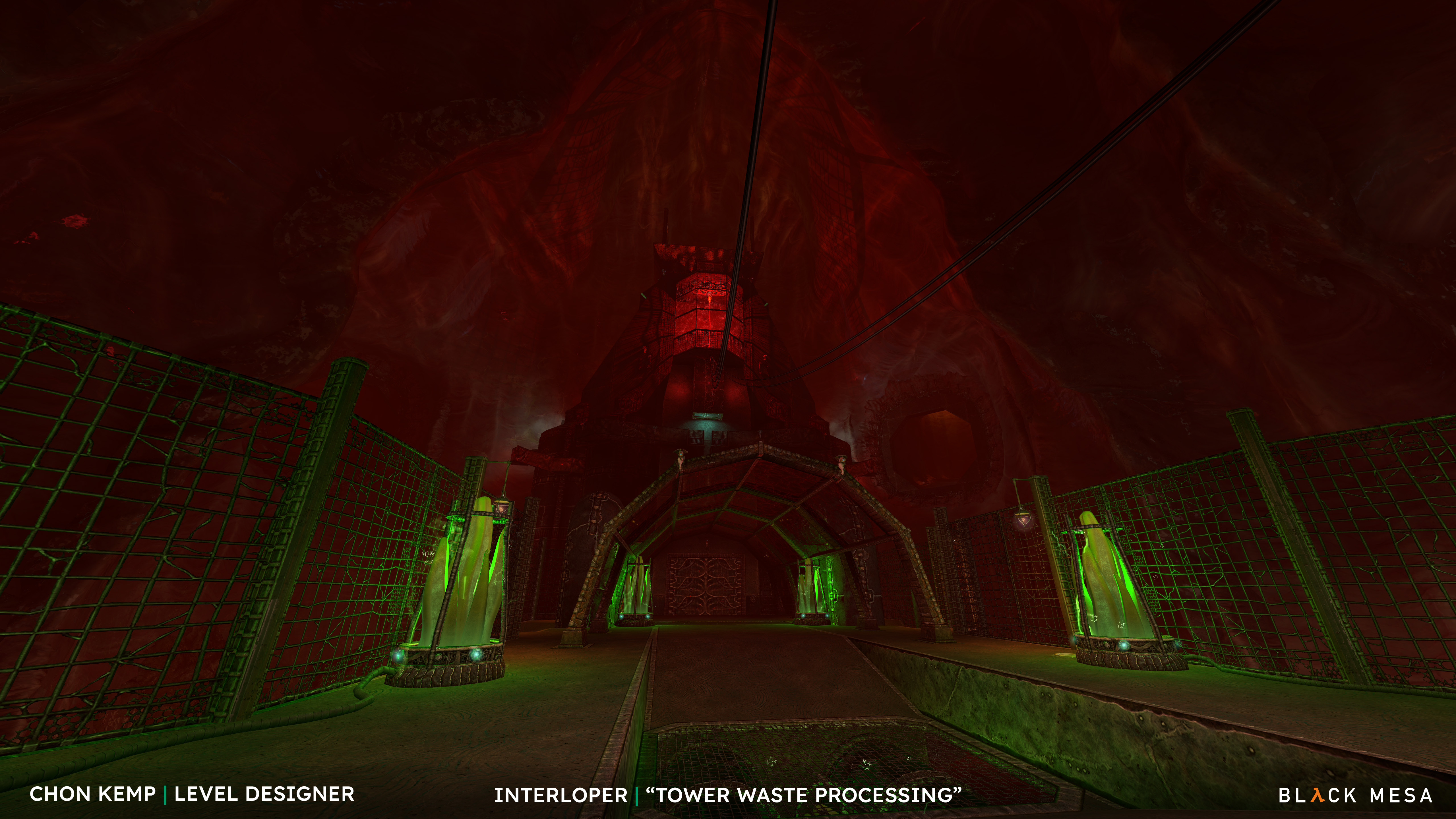
For the Waste Processing section, we leaned heavily into the idea of the player as the “Interloper.” I’m particularly proud of the traversal and flow through these levels.
One key decision that aided this was the use of large glowing red power cores at each room’s main exit to guide players across the spaces. These cores acted as visual anchors, and we ensured they were framed clearly by the entrance of each space. This kind of objective framing became a core part of how we approached Xen, and this strength in player guidance is something I take great pride in as a level designer.
Reception
Unfortunately, Interloper received mixed reception, most notably for its length: a critique that I ultimately agree with. We wanted the chapter to feel like a slog, with the Nihilanth fight acting as a reward at the end, but we pushed that idea too far.
At the time, I disagreed with our project lead’s suggestions that we cut several levels from Interloper to save in development time and help pacing. In hindsight, I think that would have been the right call.
This experience taught me an important lesson about editing and pacing. I also think we leaned too heavily on reusing and layering earlier puzzle mechanics (particularly the plug puzzles), which made sections feel repetitive. It highlighted how difficult it can be for designers to balance familiarity with novelty, and how easy it is to miss that mark.